
What Is C++ Programming Language?
Introduction
Technology changes rapidly, but some c++ programming languages continue to stay relevant for decades. What is C++ programming language , one of those languages that still powers major software systems around the world. From operating systems and video games to banking applications and embedded devices, C++ remains a trusted choice for developers who need speed, control, and performance.
Whether you are a beginner planning to enter the software field or an experienced programmer exploring system-level development, understanding C++ can open many opportunities. This language combines powerful features with high efficiency, making it useful in both small projects and large-scale applications.
History of C++
What is C++ programming language, created by Bjarne Stroustrup in the early 1980s at Bell Labs. The language was developed as an extension of the C programming language. Stroustrup wanted to add object-oriented programming features to C without losing its speed and efficiency.
Initially, the language was called “C with Classes” because it introduced classes and object-oriented concepts. Later, the name was changed to C++, where “++” represents the increment operator in C, symbolizing an improved version of the language.
Over the years, C++ has evolved through multiple standards such as C++98, C++11, C++17, and the latest modern versions. Each update introduced better performance, safer programming methods, and more advanced libraries.
What Makes C++ Different?
What Is C++ programming language? known as a middle-level programming language because it supports both low-level and high-level programming. Developers can directly interact with hardware while also building complex applications using modern programming techniques.
Unlike many beginner-friendly languages that hide system operations, C++ gives programmers greater control over memory and resources. This level of control makes it highly efficient but also requires careful coding practices.
Another major strength of C++ is its support for multiple programming styles, including:
Procedural programming
Object-oriented programming
Generic programming
Functional programming
This flexibility allows developers to solve different types of problems using the same language.
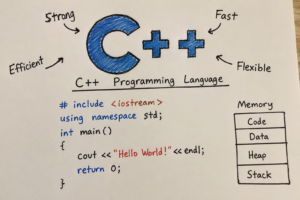
Key Features of What Is C++ Programming Language?
Object-Oriented Programming
C++ is widely recognized for object-oriented programming concepts such as classes, objects, inheritance, encapsulation, abstraction, and polymorphism. These features help developers organize code more efficiently and make large programs easier to manage.
High Performance
Applications written in C++ are usually very fast because the language is compiled directly into machine code. This makes it ideal for software where speed matters, such as games, browsers, and operating systems.
Memory Management
C++ allows manual memory allocation using pointers and dynamic memory functions. While this requires responsibility from developers, it also provides excellent control over system resources.
Rich Standard Library
The Standard Template Library (STL) offers ready-made tools such as vectors, stacks, queues, maps, and algorithms. These libraries simplify development and reduce coding time.
Portability
Programs written in C++ can run on different operating systems with minimal changes. This portability makes the language suitable for cross-platform development.
Advantages of Learning What Is C++ Prigramming Language?
Learning C++ offers several long-term benefits for programmers and students.
Strong Programming Foundation
C++ teaches core programming concepts like memory management, data structures, and algorithms. Once you understand C++, learning other languages becomes easier.
Career Opportunities
Many industries still rely heavily on C++. Companies working in gaming, robotics, cybersecurity, finance, and embedded systems regularly hire C++ developers.
Faster Execution
Compared to interpreted languages; C++ applications execute much faster. This performance advantage is important for high-demand systems.
Useful for Competitive Programming
C++ is a favorite language in coding competitions because of its speed and powerful libraries.
Disadvantages of C++
Despite its strengths, C++ also has a few limitations.
The syntax can be difficult for beginners.
Manual memory management may cause errors if not handled carefully.
Debugging large applications sometimes becomes challenging.
Development can take more time compared to modern scripting languages.
However, these challenges often help programmers build stronger technical skills.
Real-World Applications of C++
C++ continues to play an important role in modern technology. Some common applications include:
Game Development
Popular game engines like Unreal Engine use C++ because of its high performance and graphics capabilities.
Operating Systems
Parts of operating systems such as Microsoft Windows and Linux components are written in C++.
Web Browsers
Web browsers like Google Chrome use C++ for speed and efficient resource handling.
Banking and Financial Systems
Financial institutions use C++ for trading platforms and banking applications where fast processing is critical.
Embedded Systems
”What is C++ programming language” is commonly used in embedded devices, robotics, and automotive software because it interacts efficiently with hardware.
Basic Structure of a C++ Program
A simple C++ program usually contains:
Header files
Main function
Variables and data types
Input and output statements
Functions and classes
Here is a small example:
#include
using namespace std;
int main() {
cout << “Hello, World!”;
return 0;
}
This program prints a message on the screen and demonstrates the basic syntax of C++.
Why C++ progarmming language Still Matters
Even after decades, C++ programming language remains highly relevant. Modern industries still depend on software that requires performance, reliability, and system-level access. Emerging technologies like artificial intelligence, robotics, game engines, and high-frequency trading continue to use C++ for critical operations.
Modern updates have also made the language safer and more developer friendly. Features introduced in recent standards help reduce coding complexity and improve efficiency.
As software systems grow more advanced, the demand for experienced C++ programmers is expected to continue.
Tips for Beginners What Is C++ Programming Language?
If you are starting your ”What is C++ programming language” journey, focus on the basics before moving to advanced topics.
Learn variables, loops, and functions first.
Practice small coding exercises daily.
Understand object-oriented programming concepts clearly.
Build simple projects like calculators or management systems.
Study data structures and algorithms using C++.
Consistency is more important than speed when learning programming.
Conclusion
” What is C++ programming language?” is more than just an old programming language. It remains one of the most powerful and respected technologies in software development. Its combination of speed, flexibility, and deep system control makes it valuable for both beginners and professionals.
Although mastering ”What is C++ programming language ”takes time and patience, the knowledge gained creates a strong foundation for a successful programming career. From gaming and operating systems to robotics and finance, C++ continues to shape the digital world and will likely remain important for many years ahead.